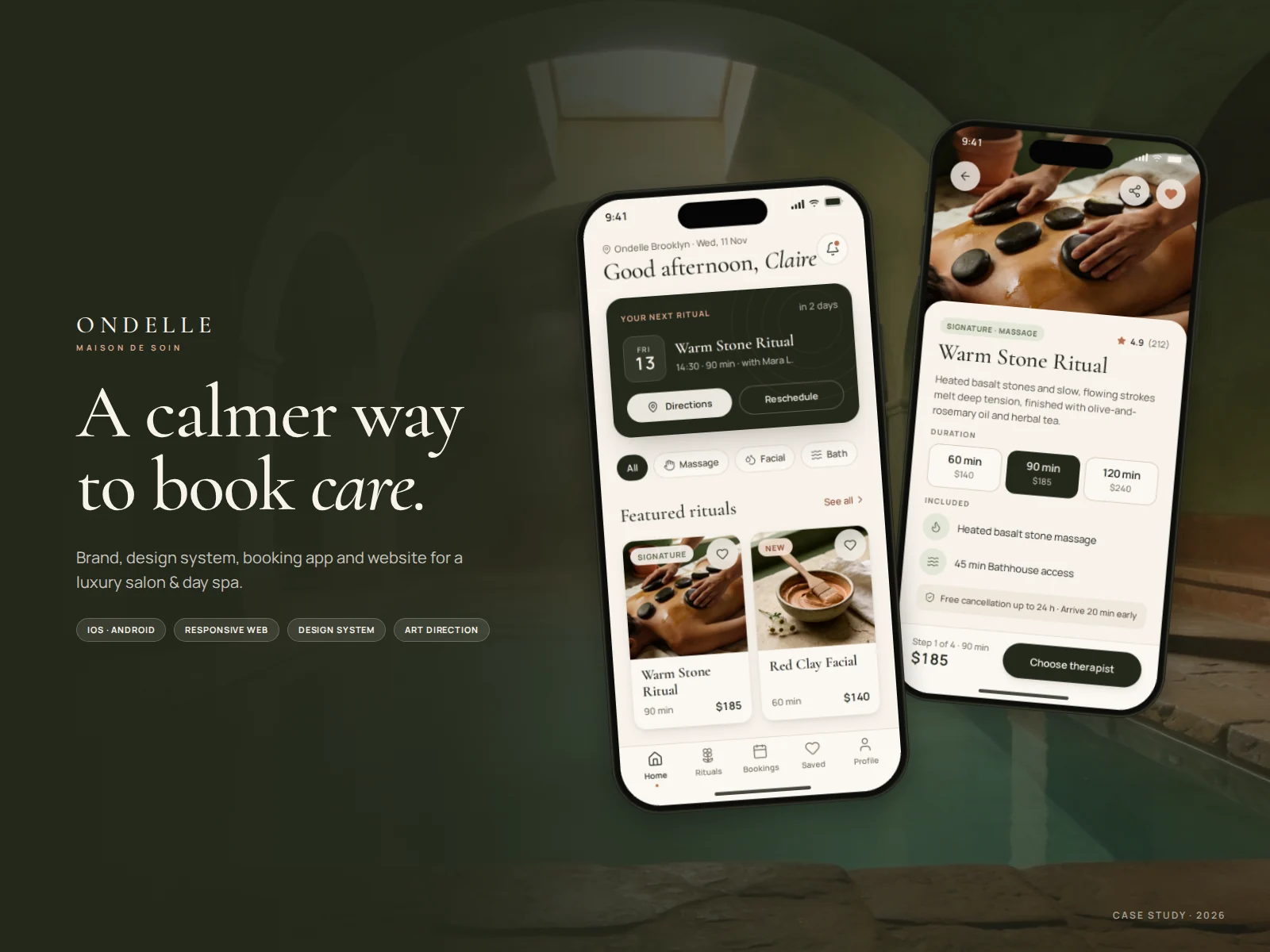
Ondelle — a calmer way to book care.
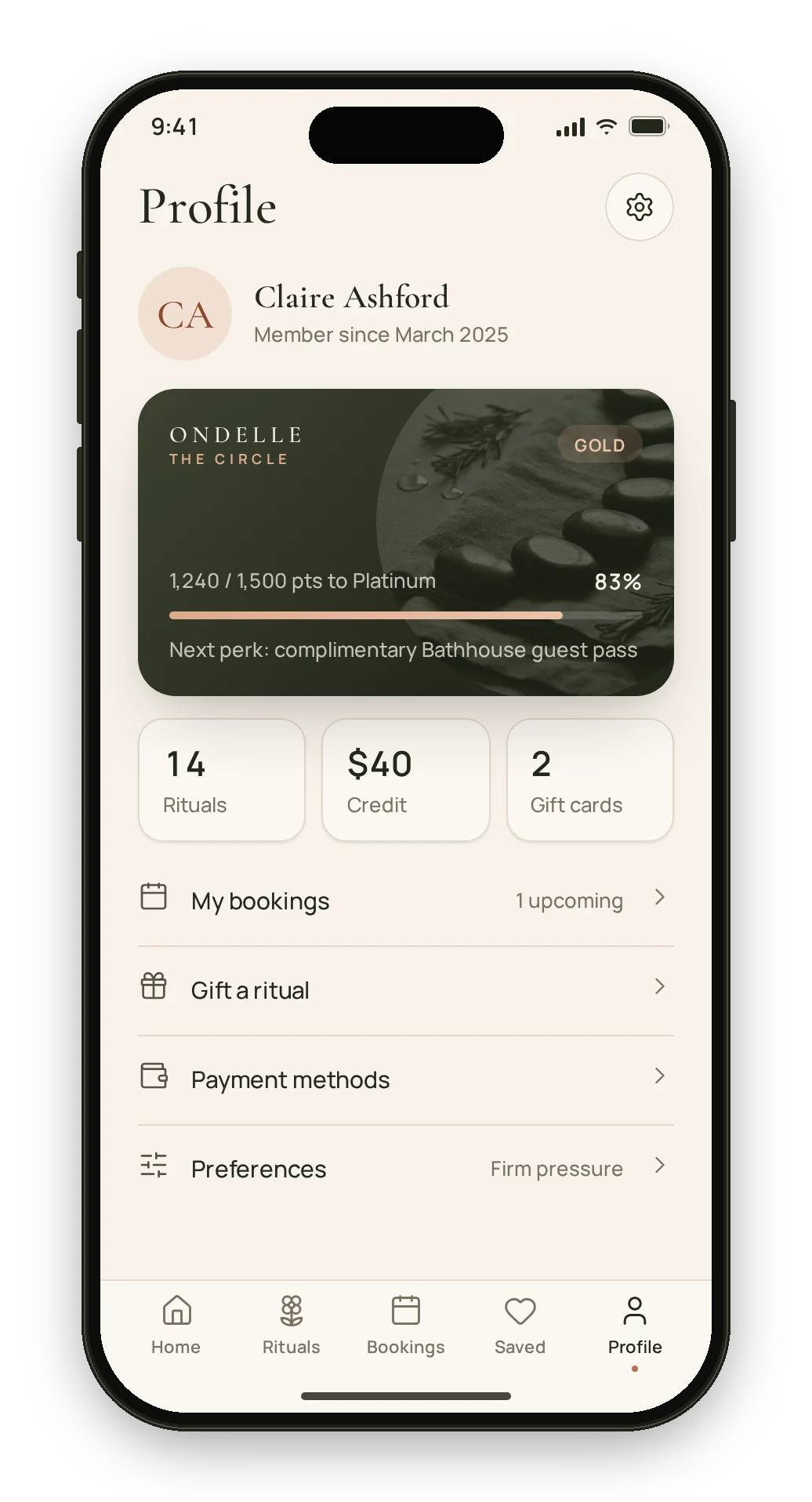
Brand art direction, a Figma-ready design system, an 8-screen booking app and a responsive website for a luxury salon & day spa.
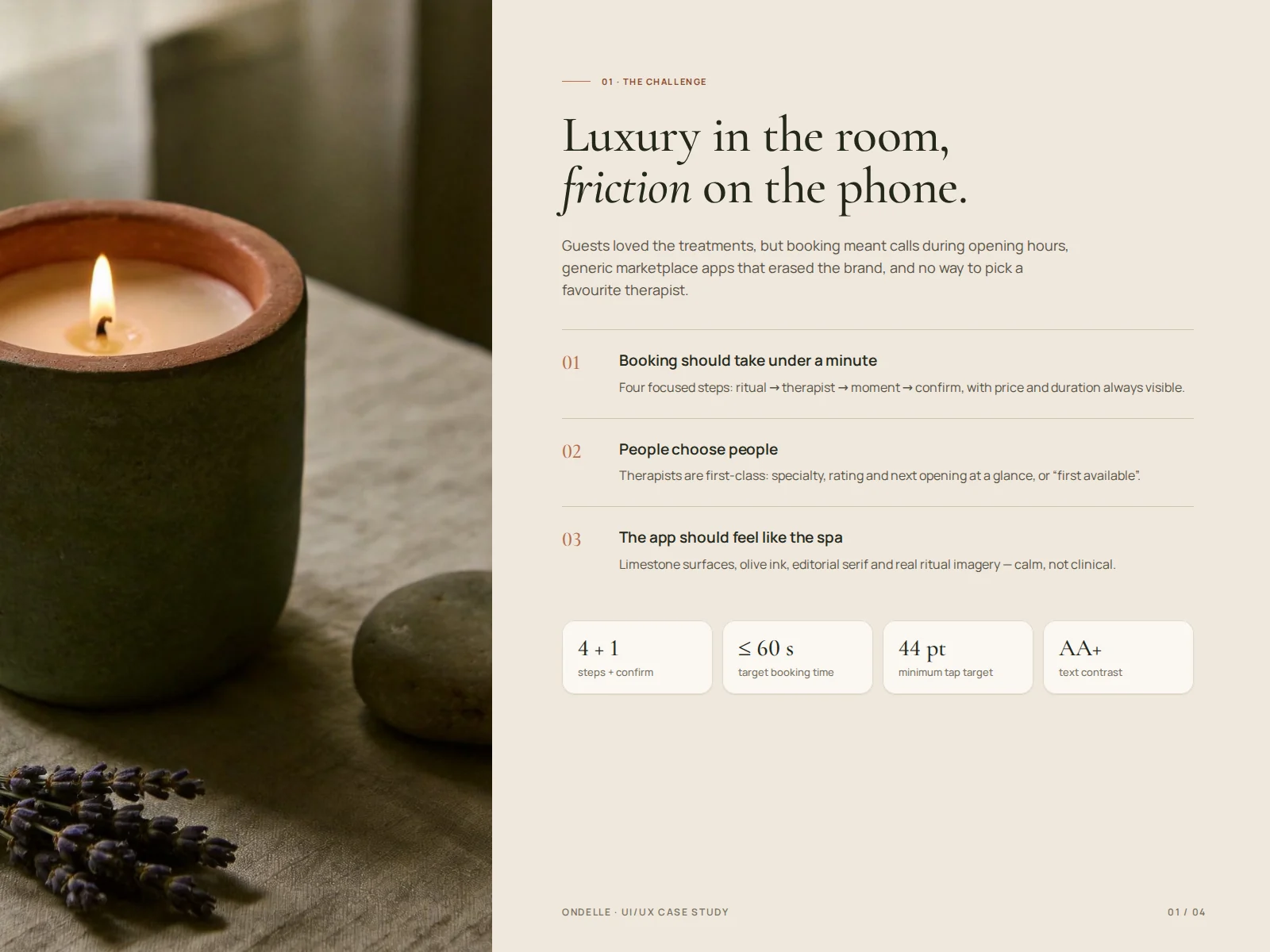
Luxury in the room, friction on the phone.
Booking by phone during opening hours, marketplace apps that erase the brand, and no way to choose a favourite therapist. The goal: a booking flow that feels like the spa itself — and takes under a minute.
Stone, sage, clay & olive.
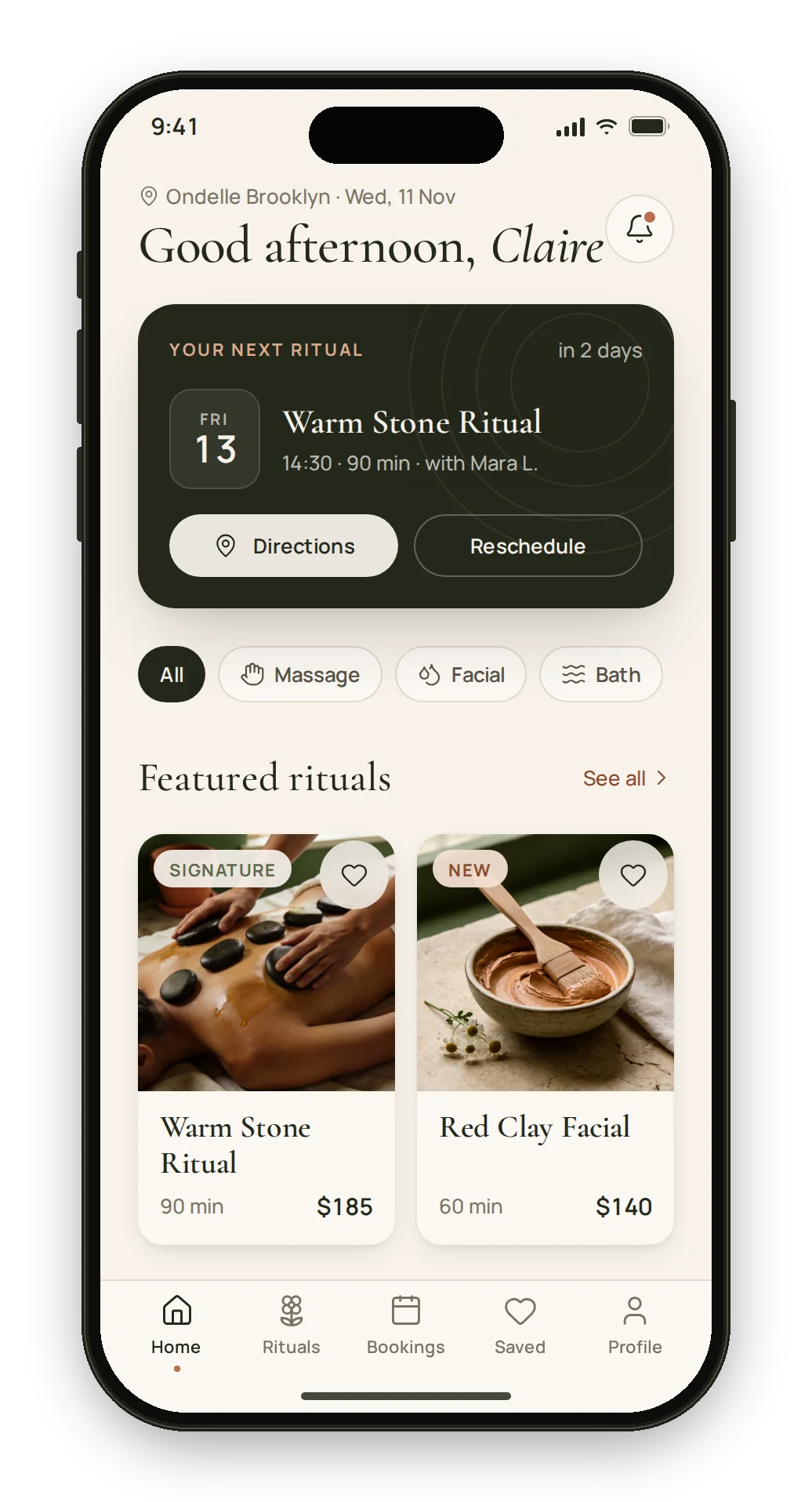
Warm limestone surfaces instead of white, olive ink (13.5:1 contrast) for text and primary actions, clay as a sparing accent. Cormorant Garamond for editorial headings, Manrope for the interface. A 4-pt spacing scale, 6 radii, 3 elevations, Lucide icons.
Open the full style sheet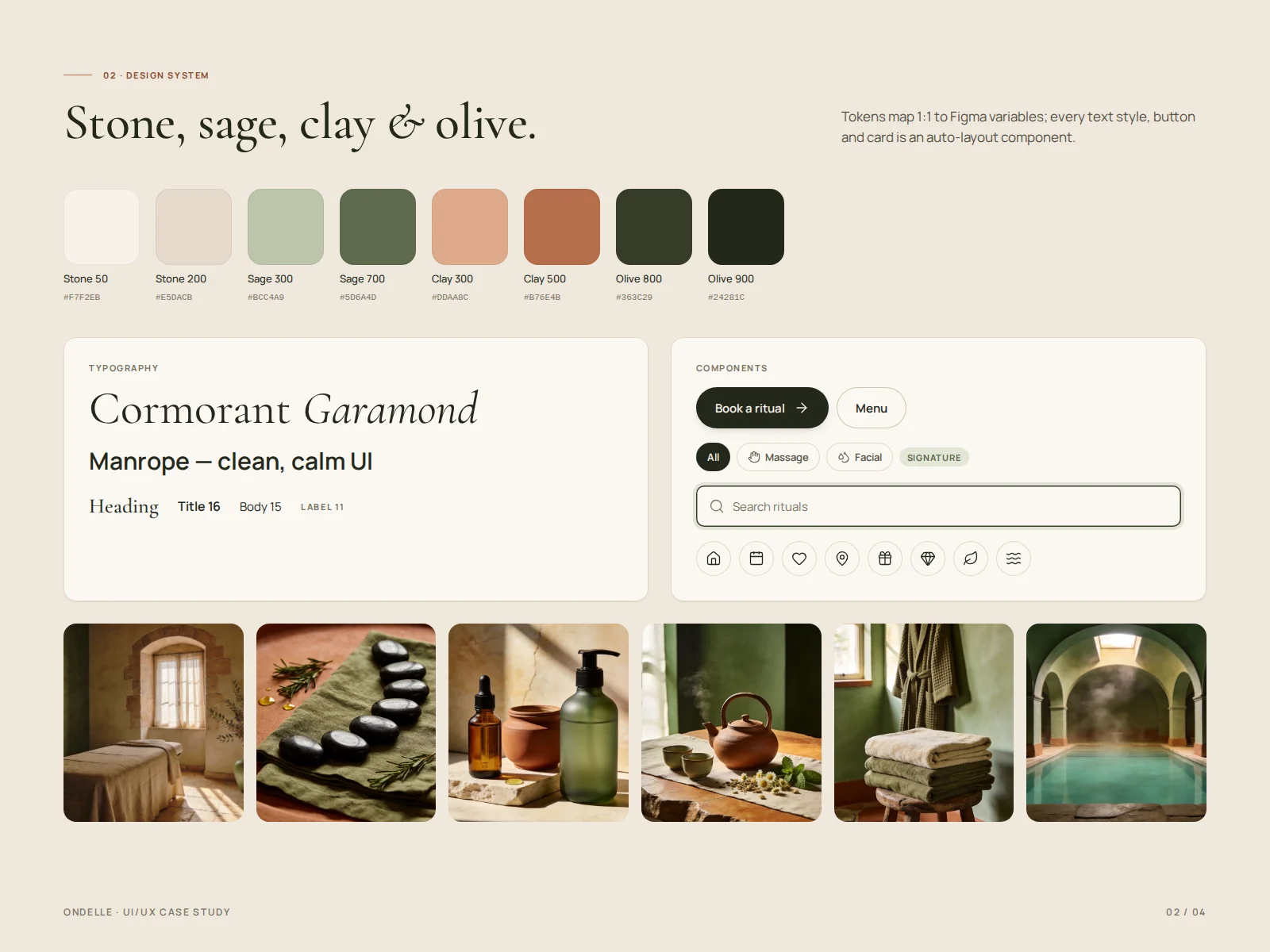
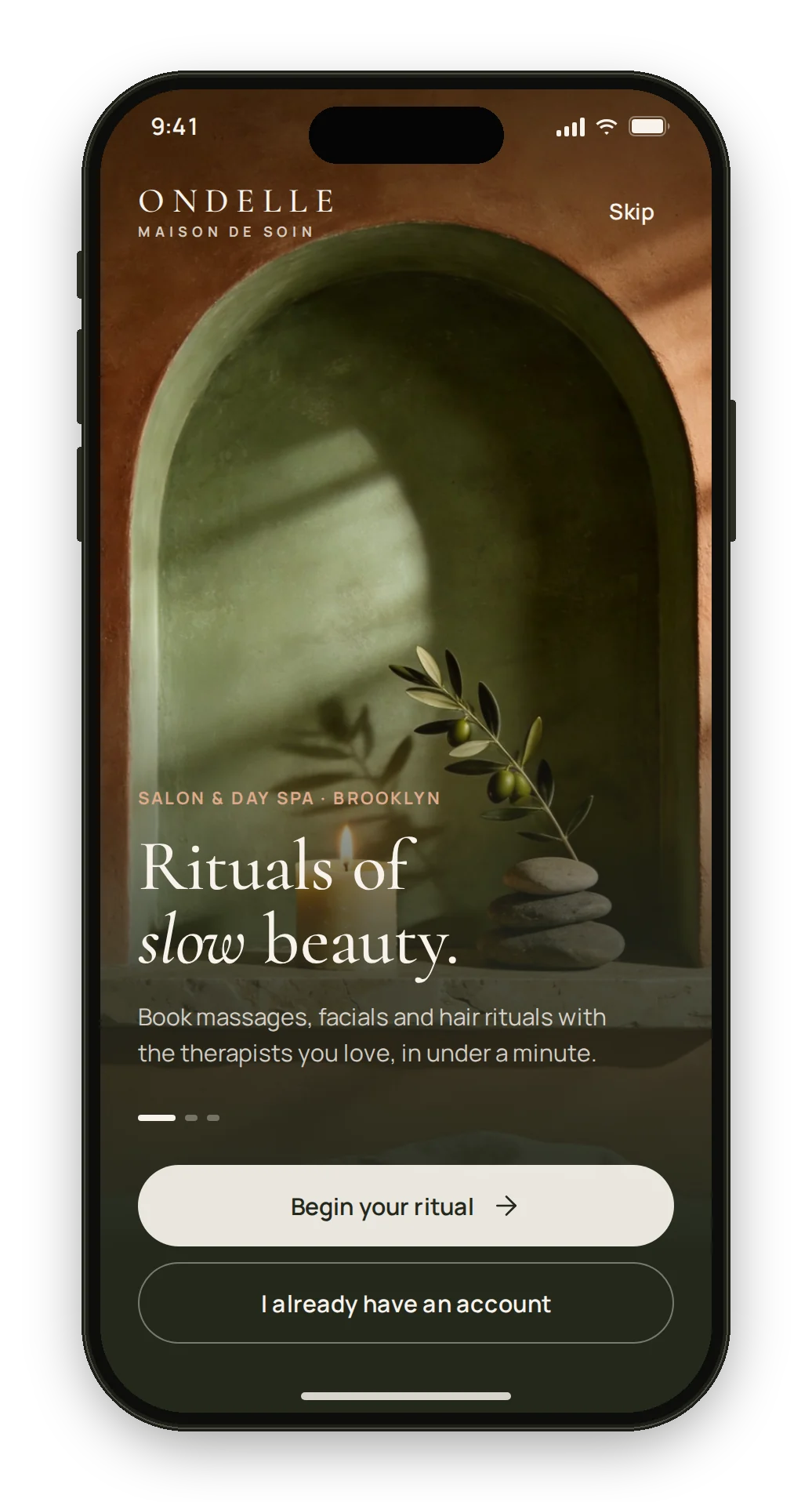
Calm hierarchy, one clear action.
Each screen has one primary button in olive, prices and durations stay visible, and every tap target is at least 44 pt. Tap a frame to open the live HTML version.
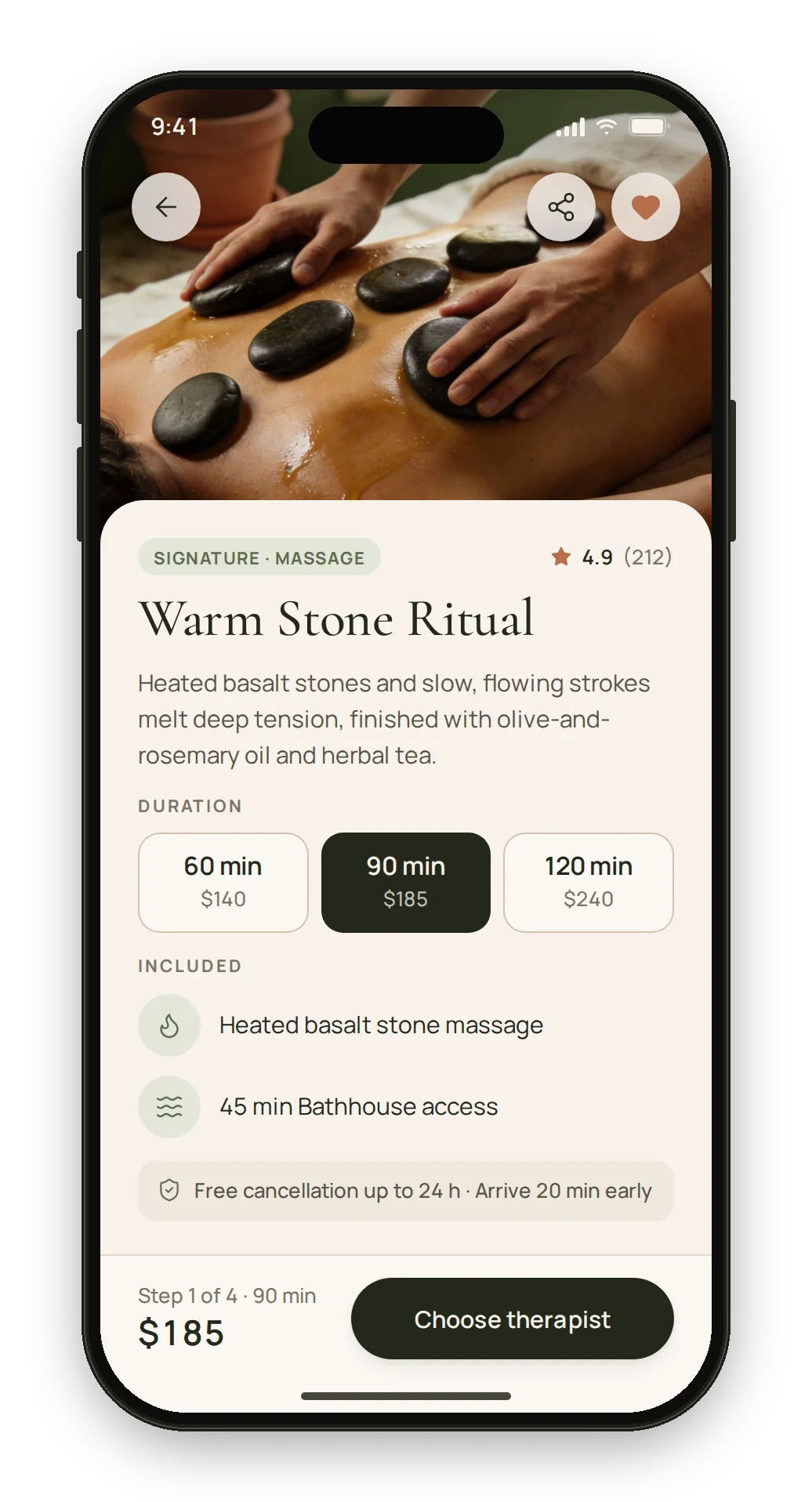
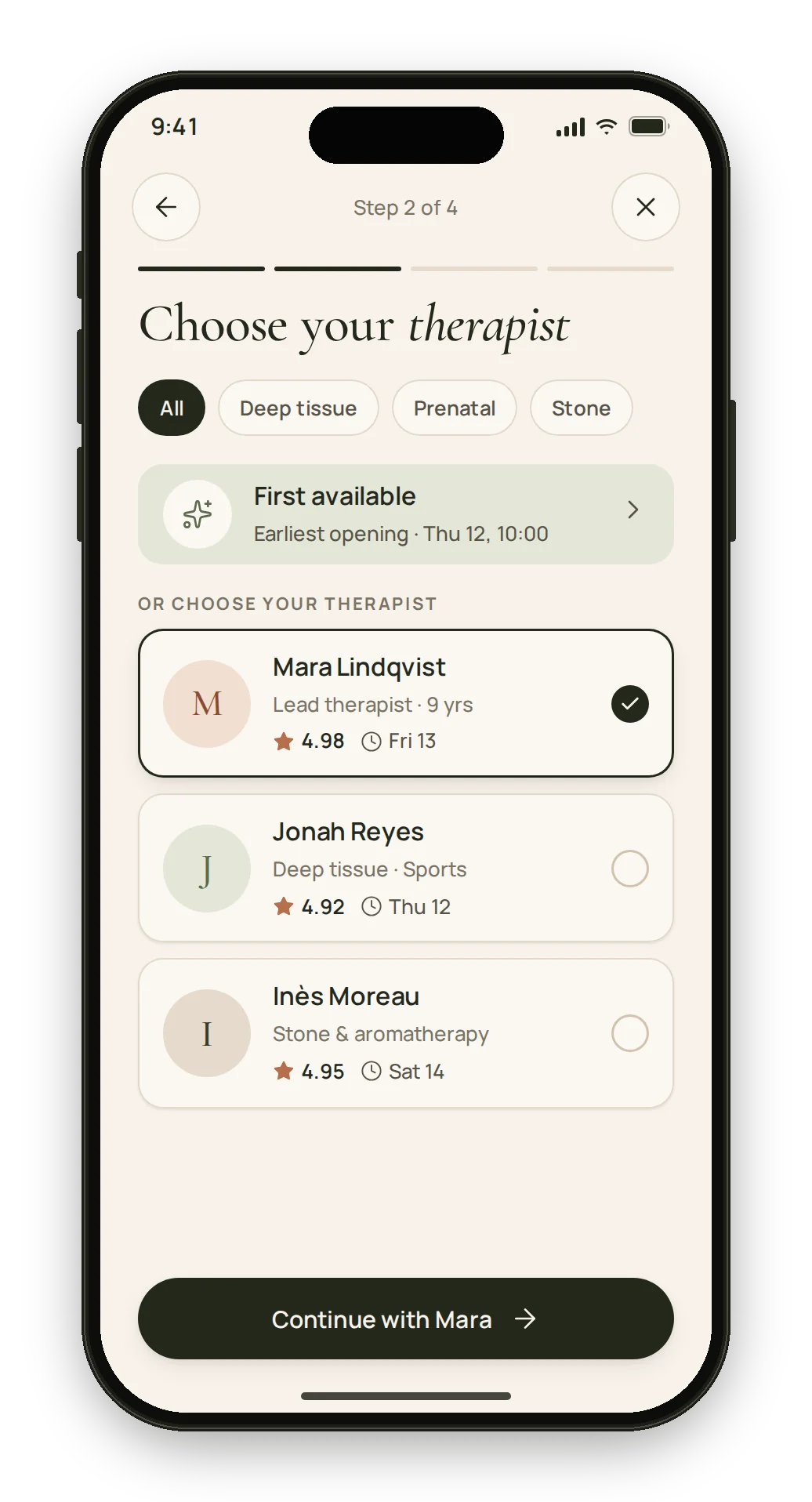
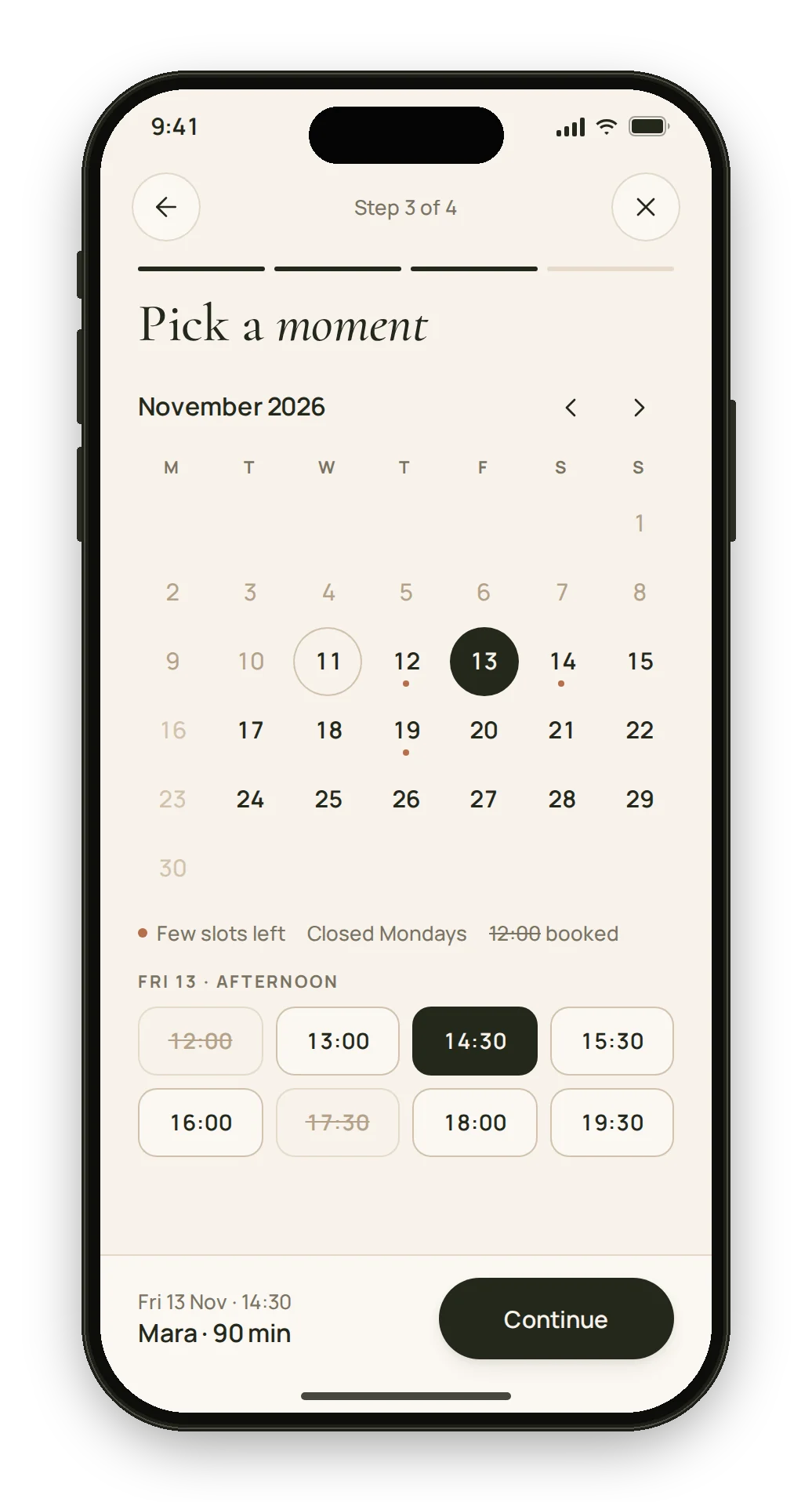
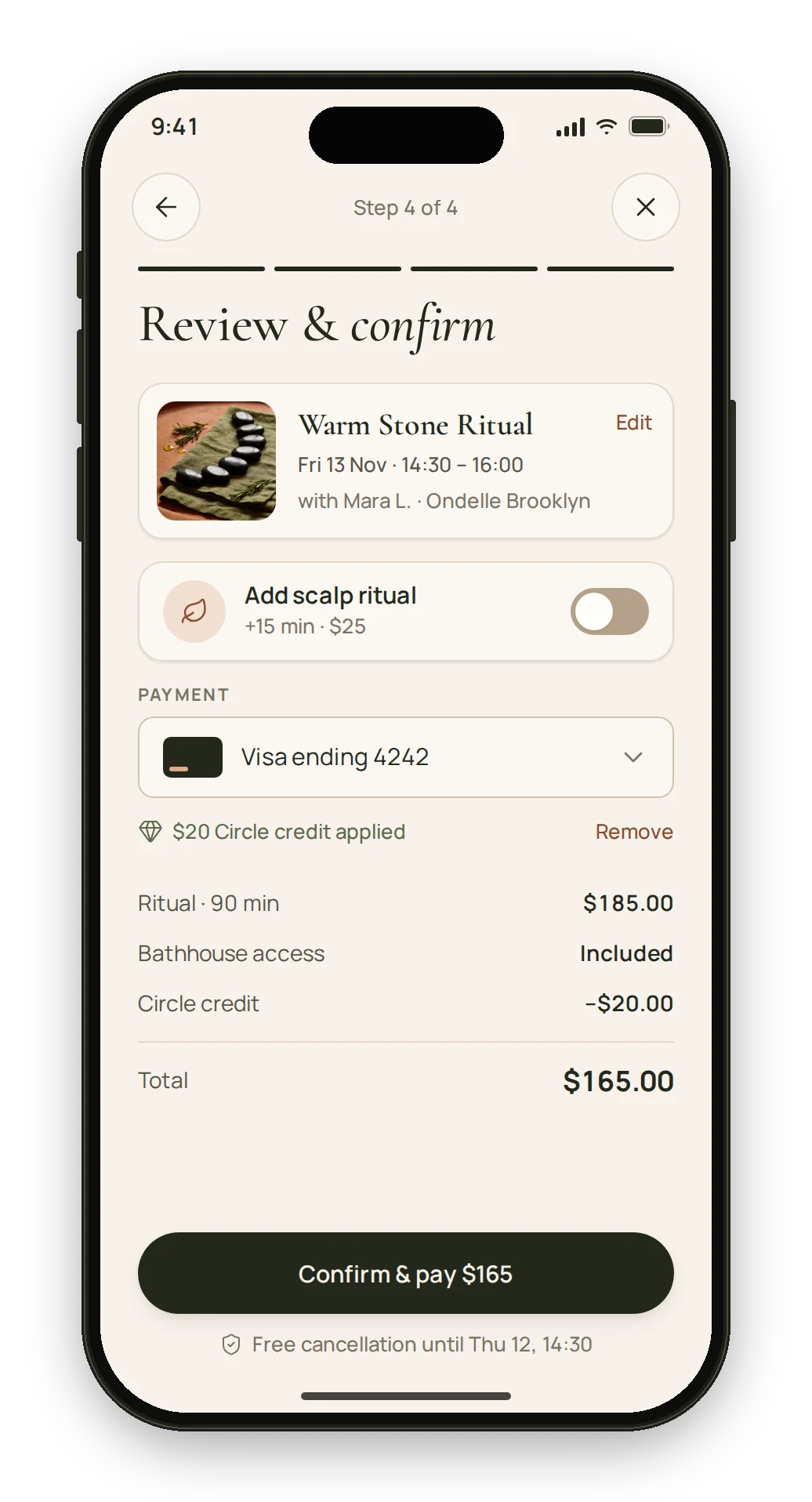
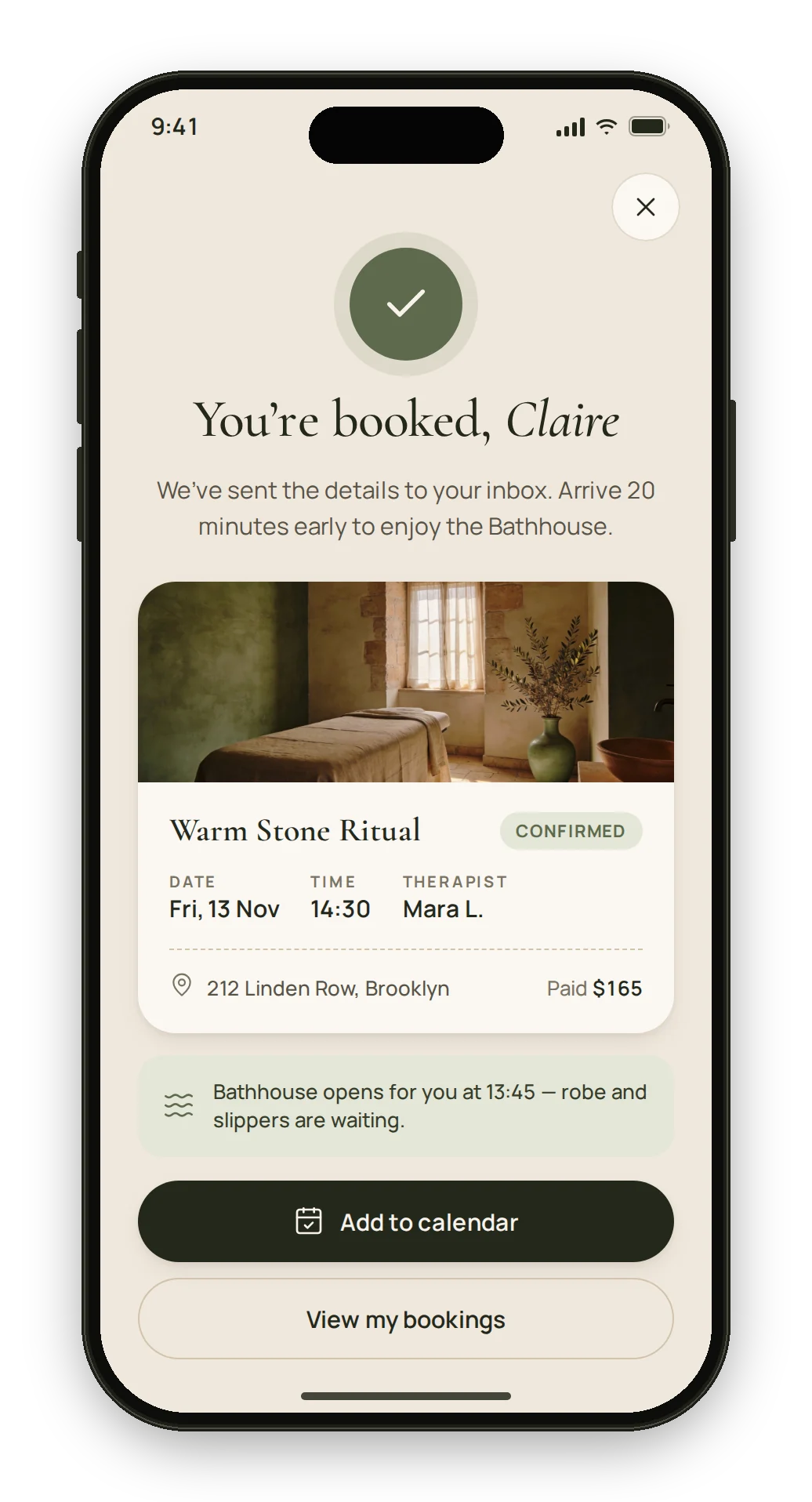
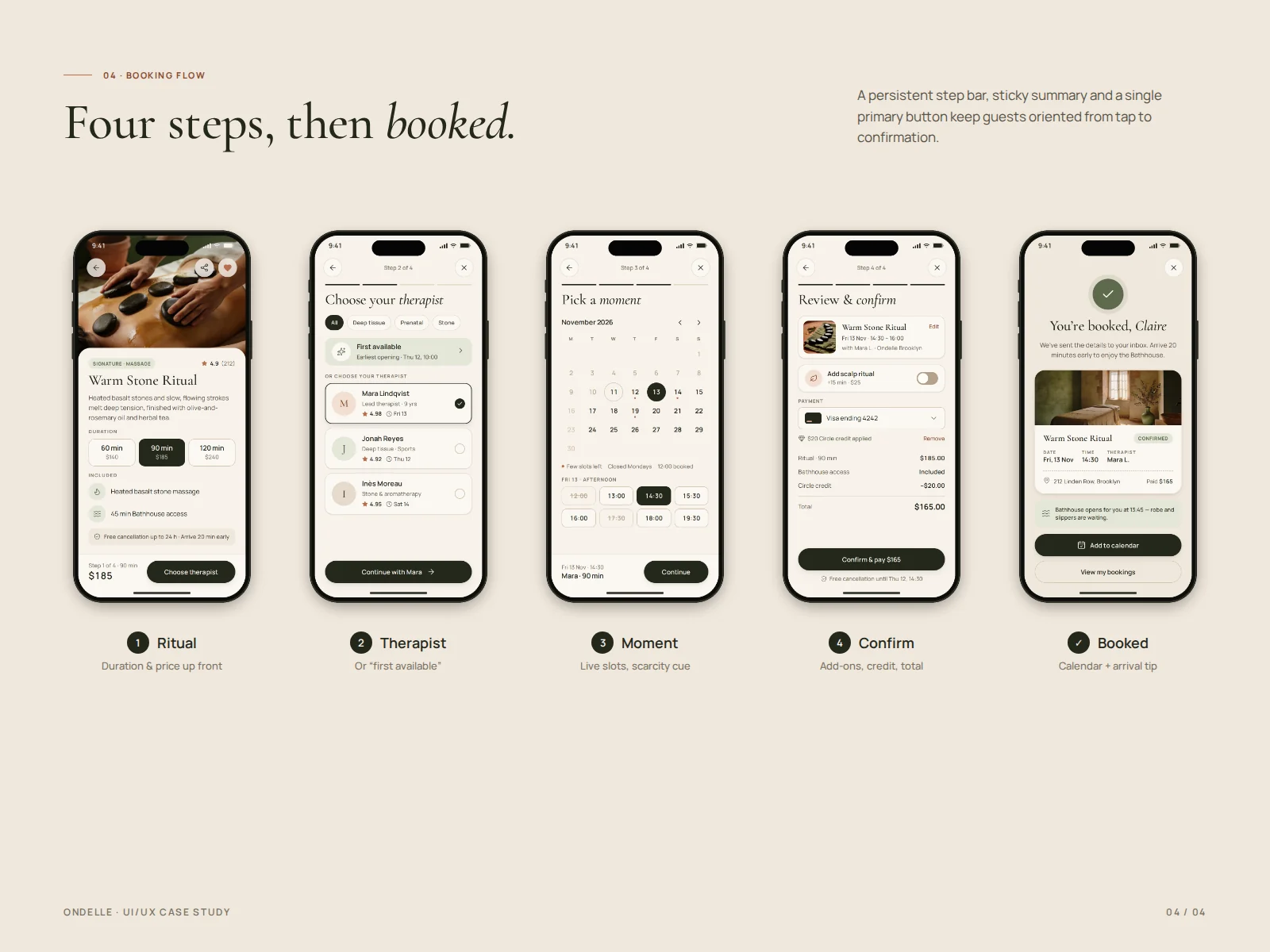
Four steps, then booked.
Ritual → therapist → moment → confirm. A persistent step bar, a sticky summary and free-cancellation reassurance keep guests oriented; the confirmation adds calendar sync and an arrival tip.
The house, online.
An editorial homepage that sells the experience first — philosophy, signature rituals, the Bathhouse, membership — with “Book a ritual” always one tap away. Designed at 1440 and 390.
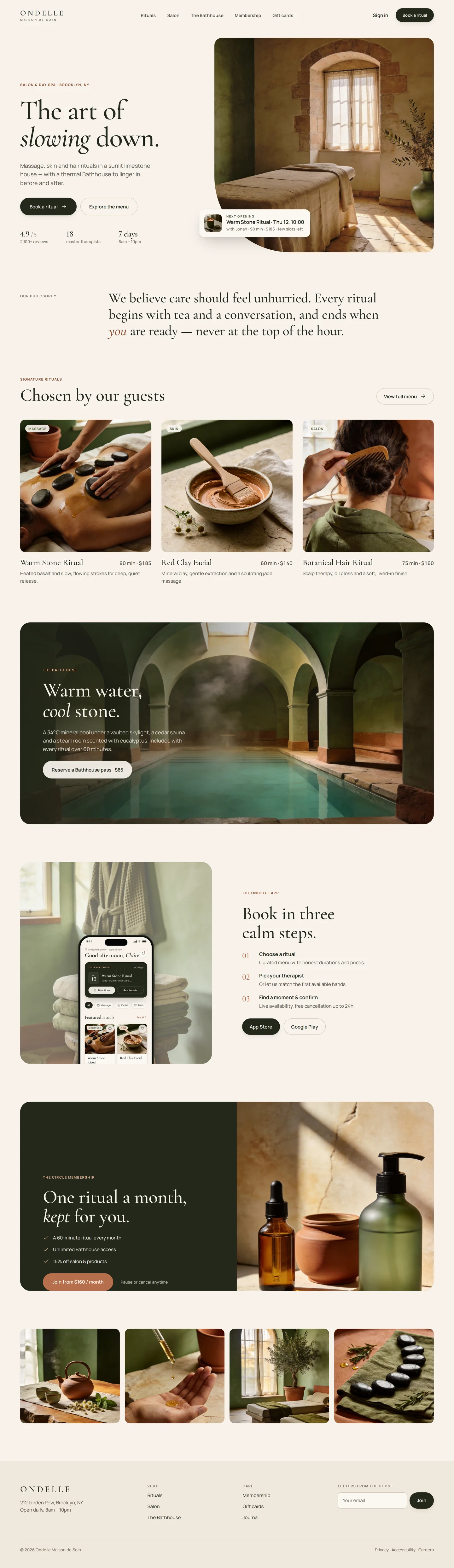

Scroll inside the frames · desktop HTML · mobile HTML
Built to move into Figma.
Frames are exact 390 × 844 / 1440 pages built with flex rows and columns that import as auto-layout. CSS variables map to Figma variables, .t-* classes to text styles, .c-* classes to components, and layers carry data-name labels.